



Customer sentiment analysis: Turning customer feedback into actionable insight

Emily Sullivan is an experienced marketing professional with over a decade of expertise in content creation, communications, and digital strategy. She thrives on translating complex, technical subject matter into content that is approachable, insightful, and genuinely useful to marketing professionals navigating a fast-evolving landscape.

Ola Wolski is a marketing research professional with nearly seven years of experience in social media strategy, innovative research, and data-driven marketing measurement. She thrives on digging into complex data to surface the clear, actionable insights that help brands measure what matters and invest with confidence in a rapidly evolving digital landscape.

- 1. What is a customer sentiment analysis?
- 2. Where surveys fit in
- 3. How a customer sentiment analysis works
- 4. Step 1: Define the business problem
- 5. Step 2: Design structured feedback collection
- 6. Step 3: Standardize and structure qualitative input
- 7. Step 4: Apply sentiment scoring and thematic clustering
- 8. Step 5: Quantify patterns across segments
- 9. Step 6: Connect findings to performance data
- 10. Customer sentiment analysis examples
- 11. Example 1: Diagnosing conversion friction
- 12. Example 2: De-risking creative investment
- 13. Example 3: Retention & churn prevention
- 14. Where a customer sentiment analysis creates business value
- 15. Market & customer understanding
- 16. Product & positioning alignment
- 17. Creative & messaging optimization
- 18. Customer satisfaction & retention
- 19. The limitations of a customer sentiment analysis
- 20. From insight to action: Operationalizing sentiment data
- 21. Step 1: Start with a clearly defined business question
- 22. Step 2: Deploy structured feedback mechanisms
- 23. Step 3: Quantify sentiment and thematic patterns
- 24. Step 4: Size the impact across segments
- 25. Step 5: Link sentiment to behavioral and economic metrics
- 26. Step 6: Prioritize actions based on projected revenue impact
- 27. Step 7: Test, measure, and iterate
- 28. Turn customer feedback into a strategic advantage with fusepoint

Your company collects more customer feedback than ever before: Post-purchase surveys, NPS comments, product reviews, support tickets, and social media conversations. Every week, dashboards fill with new data points describing how customers feel.
Yet, feedback becomes a reporting exercise rather than a decision input. The organization listens, but it does not adapt.
That’s where customer sentiment analysis comes in.
Customer sentiment analysis is the structured process of quantifying how customers feel about your brand, products, and experiences using qualitative and unstructured feedback. Instead of relying on anecdotal interpretation, it translates language into measurable patterns: positive, negative, neutral, and nuanced emotional signals that reveal friction, satisfaction, or risk. It also reveals how each touchpoint in the customer experience is performing, from first impression to post-purchase.
However, the insight it provides only matters when it informs prioritized action and measurable growth. Let’s see how.
What is a customer sentiment analysis?
A customer sentiment analysis is the structured process of identifying, categorizing, and quantifying the emotions expressed in customer feedback to understand how customers feel about a brand, product, or experience.
In practical terms, it converts language into a signal.
Instead of reading 5,000 survey responses and forming an impression, sentiment analysis translates those responses into measurable emotional patterns. It essentially measures customer satisfaction signals at scale, going beyond a star rating to capture all the nuance behind a score.
-
It evaluates tone in written or spoken feedback.
-
It classifies input as positive, negative, or neutral.
-
More advanced models detect specific emotions, such as frustration, trust, satisfaction, confusion, hesitation, and excitement.
When learning what a customer sentiment analysis is, remember that it analyzes open-text feedback, not just numeric scores. For example, a customer might rate an experience 7/10, but their comment might read, “The product works well, but the setup was confusing, and customer support took too long.”
Sentiment analysis surfaces these nuances at scale.
Where surveys fit in
Structured surveys (particularly those with open-ended questions) are one of the most reliable sources of sentiment data. Unlike social listening or passive reviews, surveys are intentionally designed to answer priority business questions:
-
Why are conversions lagging?
-
What objections block the purchase?
-
Why are customers churning?
-
Where does the onboarding experience break down?
When designed correctly, survey-based sentiment analysis can turn feedback into strategy.
How a customer sentiment analysis works
While a customer sentiment analysis may sound technical, its logic is straightforward. Here’s how to implement it:
Step 1: Define the business problem
Before analyzing language, define the decision at stake.
Are you trying to:
-
Reduce churn?
-
Improve positioning?
-
Increase conversion?
-
Justify a pricing change?
Step 2: Design structured feedback collection
Consider open-ended questions such as:
-
“What almost stopped you from purchasing?”
-
“What frustrated you during onboarding?”
-
“What would you improve about the experience?”
These generate intentionally diagnostic feedback. Unlike scraped reviews, they align with strategic hypotheses. Survey prompts should also surface gaps between customer expectations and actual experience.
Data sources typically include:
-
Survey responses (open-text and NPS follow-up)
-
NPS comments
-
Product reviews
-
Social media posts
-
Support tickets
-
Customer service interactions and live chat logs
-
Chat and call transcripts
But survey data often produces the clearest signal because it’s structured around the right question.
Step 3: Standardize and structure qualitative input
Before analysis, feedback must be cleaned and standardized, removing misspellings, slang, sarcasm, and long narratives.
Step 4: Apply sentiment scoring and thematic clustering
Several analytical methods can be applied:
-
Rule-based tagging (keyword dictionaries)
-
Natural language processing (NLP)
-
Machine learning classifiers
-
AI-driven emotion detection models
Consider this customer sentiment analysis example:
A retail brand analyzes 40,000 product reviews. Overall sentiment is 4.3 stars, but clustering reveals repeated frustration around sizing inconsistency. The star rating hid the operational issue.
Step 5: Quantify patterns across segments
This is where insight becomes actionable. Each segment receives a customer sentiment score, weighted by revenue contribution.
-
Is frustration higher among first-time buyers?
-
Do enterprise clients express more confusion during onboarding?
-
Are negative comments clustered around one product line?
By segmenting customer sentiment against behavioral or financial data, patterns emerge.
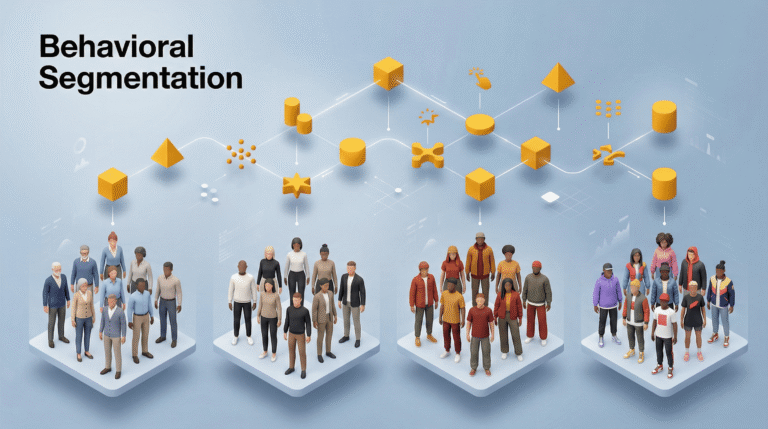
Related: Behavioral Segmentation Explained: Definition, Examples, and Types
Step 6: Connect findings to performance data
Lastly, connect customer sentiments to outcomes. Teams that track customer sentiment over time can detect leading indicators before churn spikes appear. A rising frustration sentiment trend over 90 days is a stronger predictor than a single exit survey.
-
Is a rising “confusion” sentiment correlating with lower trial-to-paid conversion?
-
Is an increased “trust” sentiment correlating with higher customer lifetime value (CLV)?
-
Is a growing “pricing concern” sentiment preceding churn spikes?
When sentiment insights are tied to revenue, margin, and retention metrics, they become a leading indicator. Customer sentiment data earns its place in strategic planning only when it correlates with observable outcomes.
Related: How to Measure and Calculate Customer Lifetime Value (CLV)
Customer sentiment analysis examples
Sentiment analysis becomes most valuable when it drives measurable business decisions.
Example 1: Diagnosing conversion friction
A consumer electronics brand sees strong traffic but stagnant conversion.
-
The team suspects pricing.
-
Product suspects UX.
-
Marketing suspects media quality.
Instead of debating, they hire a team that knows how to do customer sentiment analysis. This agency runs a structured survey targeting cart abandoners and hesitant prospects. Open-text responses are clustered and scored. Alongside surveys, customer reviews and product feedback provided corroborating signals.
A pattern emerges: Heavy use of phrases like “unclear value,” “too complicated,” and “don’t understand the difference between plans.” Negative feedback around ‘unclear value’ and ‘too complicated’ appeared in 38% of responses.
The issue is positioning clarity.
The brand simplifies its pricing page, restructures value messaging, and clarifies feature tiers. Conversion subsequently improves.
Example 2: De-risking creative investment
A national retailer prepares to scale a multi-million-dollar brand campaign. Three creative concepts are in contention, and all test similarly on awareness metrics.
Instead of guessing, the brand deploys structured concept testing surveys with open-text prompts:
-
“How does this message make you feel?”
-
“What stands out most?”
-
“What concerns you?”
A customer sentiment analysis reveals that one concept consistently generates language tied to confidence and trust, while another generates confusion around product relevance.
Depending on the brand’s priorities, it deploys media behind the validated creative.
Example 3: Retention & churn prevention
A subscription software company notices churn creeping upward. Exit surveys show generic “no longer needed” responses, but the team suspects pricing pressure.
They integrate sentiment scoring from customer service interactions, support transcripts, and onboarding surveys into their churn model. Every customer interaction, from support tickets to onboarding check-ins, was pulled into the sentiment model. Sentiment was mapped across the customer journey to identify when language shifted from engaged to frustrated.
Customers whose language shifts from neutral to frustrated (particularly around “slow support” and “hard to integrate”) are flagged before cancellation. Customers who remained on neutral sentiment for 60+ days were less likely to churn than those showing a rapid shift. Receiving this data, the team begins proactive outreach, slowing churn significantly.

How Survey Data Reorchestrated a Music Brand’s Strategy
Where a customer sentiment analysis creates business value
The impact of sentiment analysis in strategic decision-making clusters around four areas.
Market & customer understanding
Structured customer sentiment analytics replaces internal assumptions with direct customer opinion at scale. It also surfaces emerging risks to brand reputation before they compound into public-facing damage.
-
Emotional motivations driving purchase.
-
Barriers that suppress demand.
-
Unmet needs within specific segments.
Instead of hypothesizing why a segment underperforms, you quantify it. This reduces guesswork.
Product & positioning alignment
Star ratings tell you satisfaction levels, but sentiment reveals the why.
Analysis can surface:
-
Features that generate genuine enthusiasm.
-
Confusion around use cases.
-
Misalignment between perceived and intended value.
Creative & messaging optimization
Sentiment analysis allows teams to:
-
Test headlines and taglines for clarity versus ambiguity.
-
Identify which claims generate trust versus skepticism.
-
Quantify emotional lift before scaling media.
This de-risks spending. Instead of scaling based on CTR alone, you scale based on validated emotional resonance.
Customer satisfaction & retention
Structured sentiment tracking across onboarding, support, and post-purchase surveys identifies:
-
Friction points in the journey.
-
Emerging dissatisfaction trends.
-
Drivers of loyalty and advocacy.
Customer retention improves when friction signals are detected early and addressed before a subscriber churns. It informs win-back strategies and loyalty investments with evidence rather than assumptions. At a program level, this is what customer experience management looks like when it’s actually integrated with business data.
The limitations of a customer sentiment analysis
While sentiment analysis is useful, it still comes with limitations.
-
The first mistake teams make is equating emotion with action.
Positive sentiment does not guarantee purchase, and negative language does not always signal churn.
-
A second risk is amplification bias.
Online reviews, social commentary, and support tickets often overrepresent extremes. A vocal minority can distort perception, especially if leadership reacts to volume rather than distribution across segments.
-
Third, automation has limits.
NLP and AI classification models struggle with nuance, sarcasm, and contextual tone. “This product is sick” can be praise or criticism, and “Great, another update” may not mean satisfaction. Even when scoring is accurate, simple positive-negative buckets flatten complex decision-making. Consider this: A customer can love your product but distrust pricing.
-
Most importantly, sentiment alone does not prove economic impact.
Without calibration against observable outcomes, sentiment analysis creates false confidence.
Thus, sentiment must be connected to:
-
Transaction data
-
Behavioral engagement data
-
Financial performance measurement
At fusepoint, insight is only considered actionable when it survives contact with revenue and margin data. For a marketing performance measurement consulting agency, emotional signals are valuable, but they earn their place in decision-making only when validated against business performance.
From insight to action: Operationalizing sentiment data
Most organizations stop at reporting. Operationalization requires a different discipline.
Step 1: Start with a clearly defined business question
Surveys work best when anchored to a priority decision, such as:
-
“Why is conversion lagging among high-intent visitors?”
-
“What is driving churn among annual subscribers?”
Step 2: Deploy structured feedback mechanisms
Survey design determines insight quality. As such, open-ended prompts should be intentional:
-
“What almost stopped you from purchasing?”
-
“What made this feel worth the price?”
-
“What would make you reconsider?”
Survey-based sentiment analysis is especially powerful because it’s controlled, down to deciding the hypothesis.
Step 3: Quantify sentiment and thematic patterns
Raw text is coded into:
-
Emotional tone
-
Friction themes
-
Motivational drivers
-
Perception gaps
Clusters are identified for better pattern recognition.
Step 4: Size the impact across segments
Not all negative sentiment matters equally. Consider:
-
Which segment expresses it?
-
What is their revenue contribution?
-
Are they high-LTV or low-value cohorts?
Ultimately, sentiment intensity must be weighted by economic importance.
Step 5: Link sentiment to behavioral and economic metrics
Now, the calibration begins.
-
Does confusing language correlate with lower conversion?
-
Does frustration predict churn probability?
-
Does excitement language correlate with higher AOV?
Sentiment becomes predictive only when tied to:
-
Purchase frequency
-
Retention curves
-
CAC recovery
-
Margin contribution
Without this link, it remains descriptive.
Step 6: Prioritize actions based on projected revenue impact
This is where most teams fall short. Instead of listing “top themes,” the output becomes:
-
Fixing pricing page clarity will give us a projected +2% conversion lift.
-
Clarifying onboarding instructions may reduce estimated churn.
-
Adjusting creative tone for Segment B is expected to improve purchase intent.
Findings are ranked by economic impact, not emotional intensity.
Step 7: Test, measure, and iterate
With A/B testing, piloting, and validation, sentiment becomes part of a closed-loop learning system, not a static report.
Turn customer feedback into a strategic advantage with fusepoint
With advances in AI, millions of comments can be classified in seconds, and emotional tone can be detected across transcripts, reviews, and surveys at an enterprise scale.
However, competitive advantage comes from integration. As privacy shifts reduce reliance on third-party tracking, organizations that deliberately capture customer voice (designed around specific business hypotheses) will hold an insight advantage over those passively scraping social noise.
At fusepoint, customer sentiment analysis work is embedded inside a unified intelligence framework that connects structured feedback to financial performance.
-
We calibrate emotional signals against revenue data.
-
We quantify which sentiment themes predict conversion lift.
-
We validate whether improved perception translates into incremental growth.
When emotional data is connected to behavioral and economic signals, it becomes a strategic lever for sustained, defensible growth. This is the philosophy that fusepoint operates on.
If your organization is collecting feedback but struggling to translate it into confident action, it may be a problem for customer and audience consulting. That’s exactly what fusepoint is built to solve.
Sources:
ScienceDirect. Customer sentiment analysis with more sensibility. https://www.sciencedirect.com/science/article/abs/pii/S0952197621002049
ResearchGate. Sentiment analysis of customer data. https://www.researchgate.net/publication/328327037_Sentiment_analysis_of_customer_data
IBM. How can sentiment analysis be used to improve customer experience? https://www.ibm.com/think/insights/how-can-sentiment-analysis-be-used-to-improve-customer-experience
IEEE. Sentiment Analysis of Customer Feedback and Reviews in E-Commerce Systems. https://ieeexplore.ieee.org/document/10989450
Our Editorial Standards
Reviewed for Accuracy
Every piece is fact-checked for precision.
Up-to-Date Research
We reflect the latest trends and insights.
Credible References
Backed by trusted industry sources.
Actionable & Insight-Driven
Strategic takeaways for real results.
Emily Sullivan is an experienced marketing professional with over a decade of expertise in content creation, communications, and digital strategy. She thrives on translating complex, technical subject matter into content that is approachable, insightful, and genuinely useful to marketing professionals navigating a fast-evolving landscape.